
Lunar Towers and Next-Generation Heart Monitors
All-women capstone teams make noise at NASA’s ORBIT student design competition.
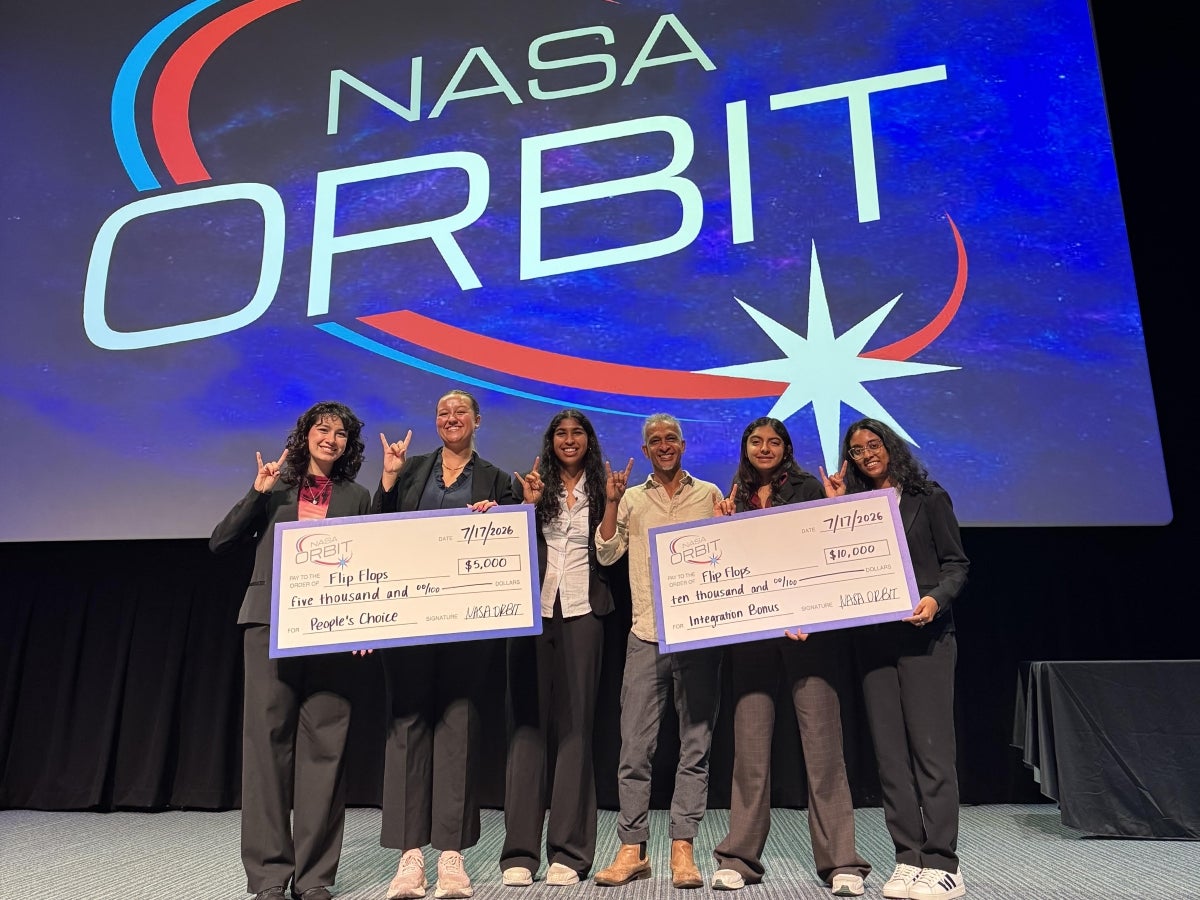
A student design team takes home several awards for their heart monitoring device.
As part of the Artemis missions, humanity may someday have a much larger presence on the Moon. That lofty goal carries both logistical and physical challenges.
Two all-woman student design teams from The University of Texas at Austin got their chance to tackle these challenges and others facing us here on Earth using real-life NASA intellectual property and mission information as part of the NASA ORBIT competition.
The two teams took home more than $30,000 in awards from the contest, one of NASA’s toughest student design competitions. One of the teams came out of the senior design capstone class taught by Adam Nokes, a lecturer in the Department of Aerospace Engineering and Engineering Mechanics. Over more than 75 capstones and 15 years of teaching, this was the first all-woman travel team to come out of Nokes’ course.
“Our undergraduate engineers are among the best in the world, and they can compete on the biggest stages,” Nokes said. “This was NASA’s largest prize for the academic year, and the competition was intense. I’m very proud of the team and the excellent work they did.”
Here’s a look at the teams’ projects as they described them:
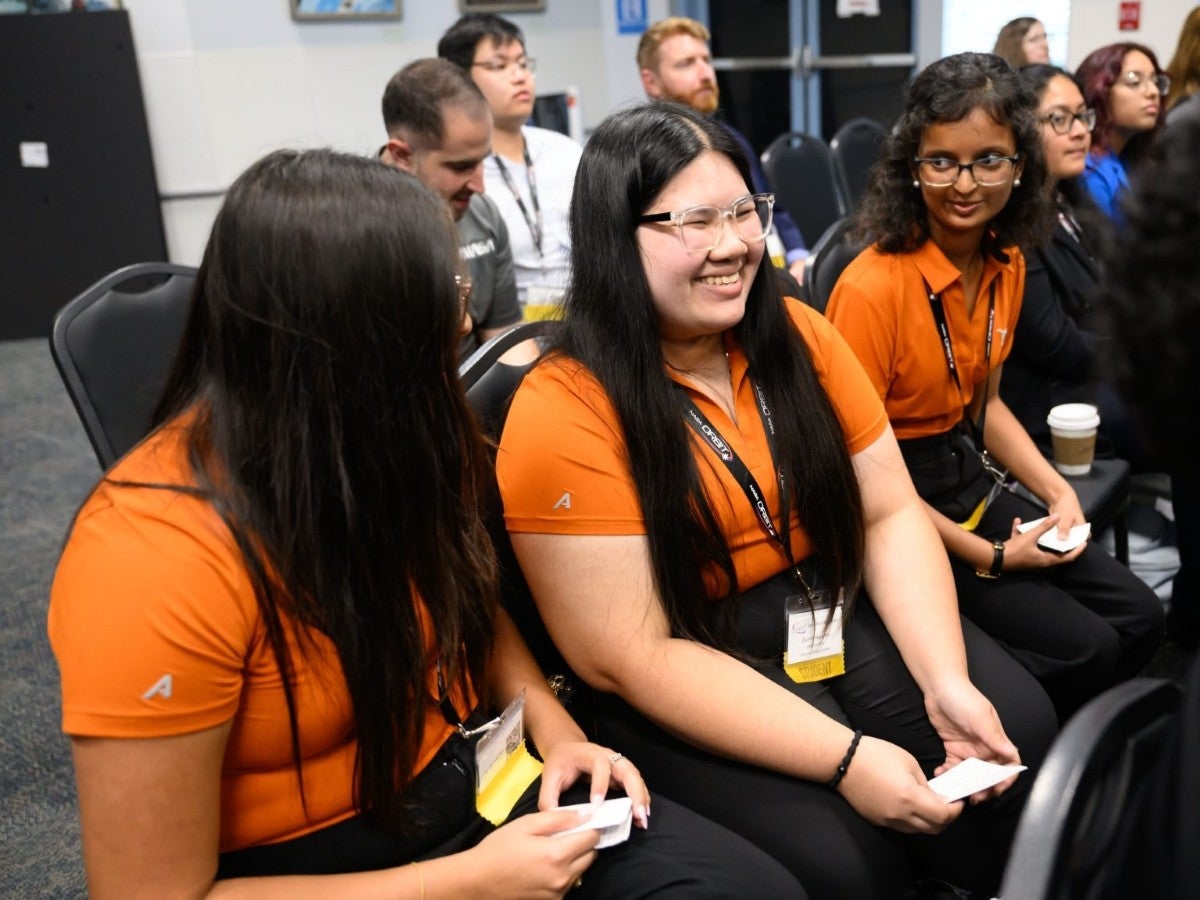
The student team behind CRYO-MORPH.
CRYO-MORPH
CRYO-MORPH is a next-generation, self-deploying 7-meter lunar tower designed to help build the foundation of NASA’s Artemis missions. Instead of relying on motors and moving parts that can fail in the Moon’s harsh, dust-filled environment, CRYO-MORPH uses advanced shape memory composites to “unfold” itself through controlled heating.
This heat-activated material enables the structure to transform from a compact, flat-packed form into a strong, stable triangular tower using an elegant helical-twist motion. The result is a lightweight, energy-efficient, and highly reliable system with no mechanical deployment risks.
Developed by a passionate student engineering team at The University of Texas at Austin, CRYO-MORPH provides a scalable solution for communication, navigation, and sensing, bringing us one step closer to the future of sustainable, autonomous construction on the lunar surface.
My takeaway from this project is that it’s okay to start from scratch and you’ll never know if your idea might be impactful. Doing this challenge on top of classes did take a lot of time and effort, but I’m glad I did it as it expanded my knowledge.
Quynh Nguyenfourth-year aerospace engineering student
Other team members are Emily Arreola, Faith Garza and Bhargavi Chauhan, all aerospace engineers. This team, advised by Nokes, secured more than $15,000 in awards in phase two of the competition.
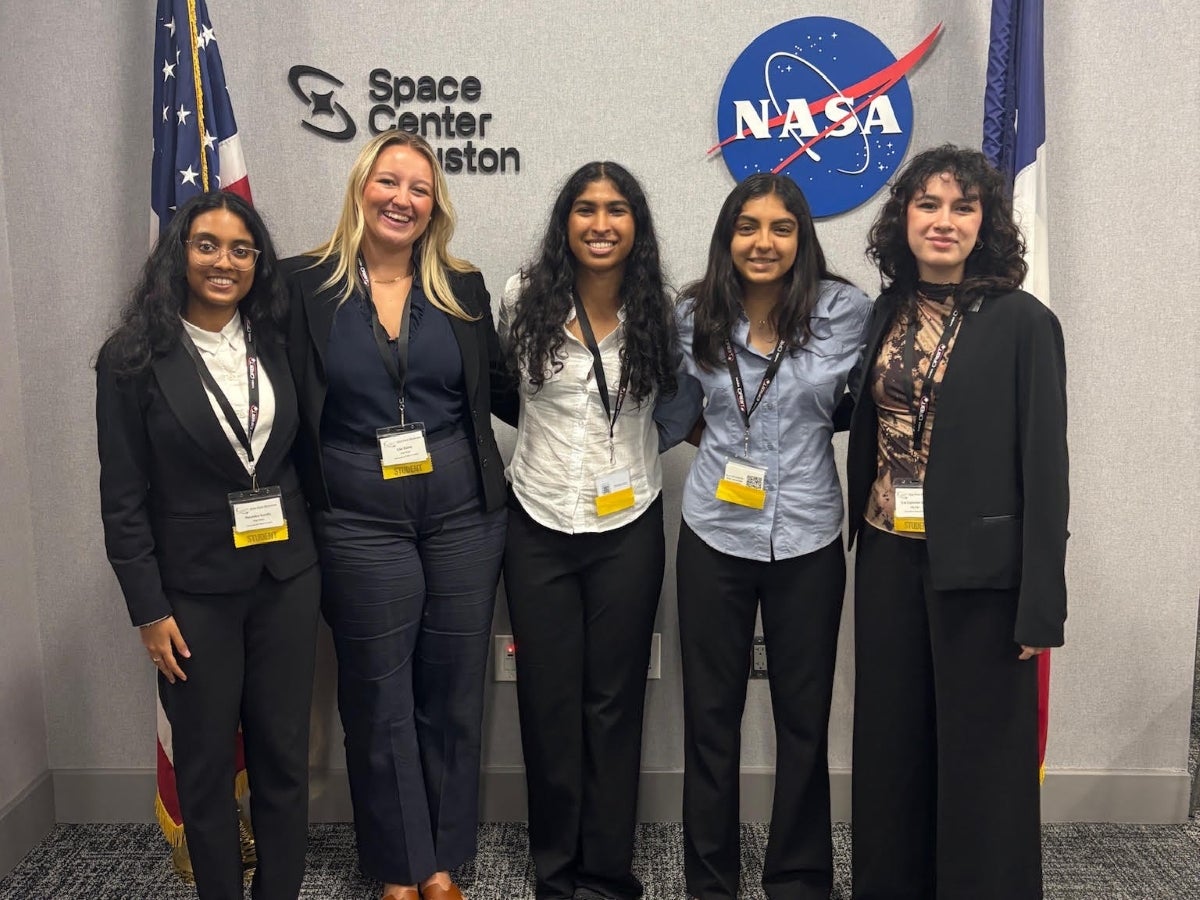
The team behind HeartSense at Space Center Houston.
HeartSense
Cardiovascular disease remains one of the leading causes of death worldwide, yet there is currently no affordable way to continuously monitor the heart’s mechanical activity outside of a hospital. HeartSense is a lightweight wearable device designed to fill this gap by continuously detecting and recording the subtle mechanical vibrations produced by each heartbeat.
Unlike smartwatches and ECG devices that measure pulse or electrical activity, HeartSense captures the heart’s physical motion using a compact chest-mounted motion sensor. The system filters out noise from breathing and movement, then wirelessly streams the heartbeat waveform to a nearby device in real time. Machine learning then enables automatic detection of early cardiac dysfunction.
Our team has built and tested a working prototype that successfully detects live heartbeat signals and is now being validated against a commercial monitor. HeartSense supports earlier insight into cardiac changes on Earth and improves astronaut health monitoring in space.
The team behind HeartSense took home the People’s Choice award for the Earth track of the competition and received an integration bonus for bringing together both space and Earth elements. The team members are Piyali Bhattacharya, Neureka Kundu, Keerthi Chandran, Eva Espinosa Ayala, Elle Bates, all electrical and computer engineering students, and Nitya Shah, who is studying computer science and neuroscience. Ramesh Yerraballi, professor of instruction in the Chandra Family Department of Electrical and Computer Engineering, served as the faculty advisor.
The challenge was a really fun experience because there was so much room to explore. We could choose any NASA patent from a huge database and build on it. The database gave everyone the same starting point, but no two teams took the same path. One of my favorite parts was seeing patents that our team had researched but ultimately passed on, and then seeing the completely different ideas other teams had developed from them. It was interesting to see how differently other people approached the same starting point.
Piyali Bhattacharyasecond year electrical and computer engineering student