
A More Comfortable, Longer-Lasting Way to Measure Brain Activity
Stretchable EEG headset works in different hair types and can be worn longer than conventional options.
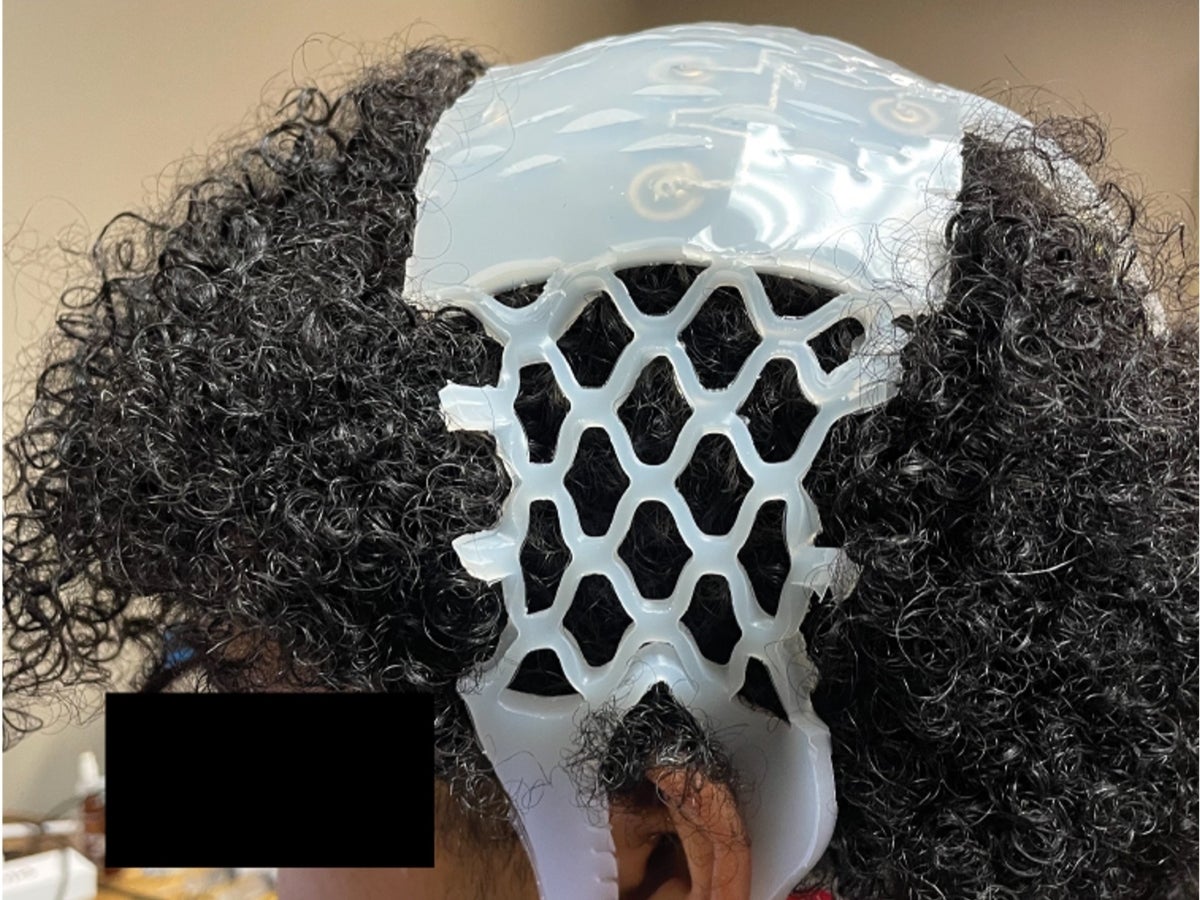
A new reusable brain-monitoring headset developed by Texas Engineers offers enhanced flexibility and longevity, while matching key benchmarks of current technology.
The new system that the researchers call MindStretcH improves on conventional electroencephalography, or EEG, which uses sensors on the scalp to measure the brain’s electrical activity. MindStretcH works across different types of hair, is flexible enough to fit a variety of head sizes and can be used for several weeks.
EEG can evaluate conditions like epilepsy and sleep disorders. It can also support brain-computer interfaces, which translate brain activity into commands for external devices.
Today’s EEG systems mostly rely on wired caps and wet or dry electrodes that require trained setup. They can be uncomfortable over extended periods and struggle with thick hair.
“The biggest obstacle to practical EEG is not the brain signal itself, but maintaining a comfortable, reliable connection between the scalp and the sensor,” said Huiliang “Evan” Wang, an assistant professor in the Cockrell School’s Department of Biomedical Engineering and senior author of the research published in Science Advances. “MindStretcH was designed to make that connection more stable across hair types, head shapes and repeated use.”
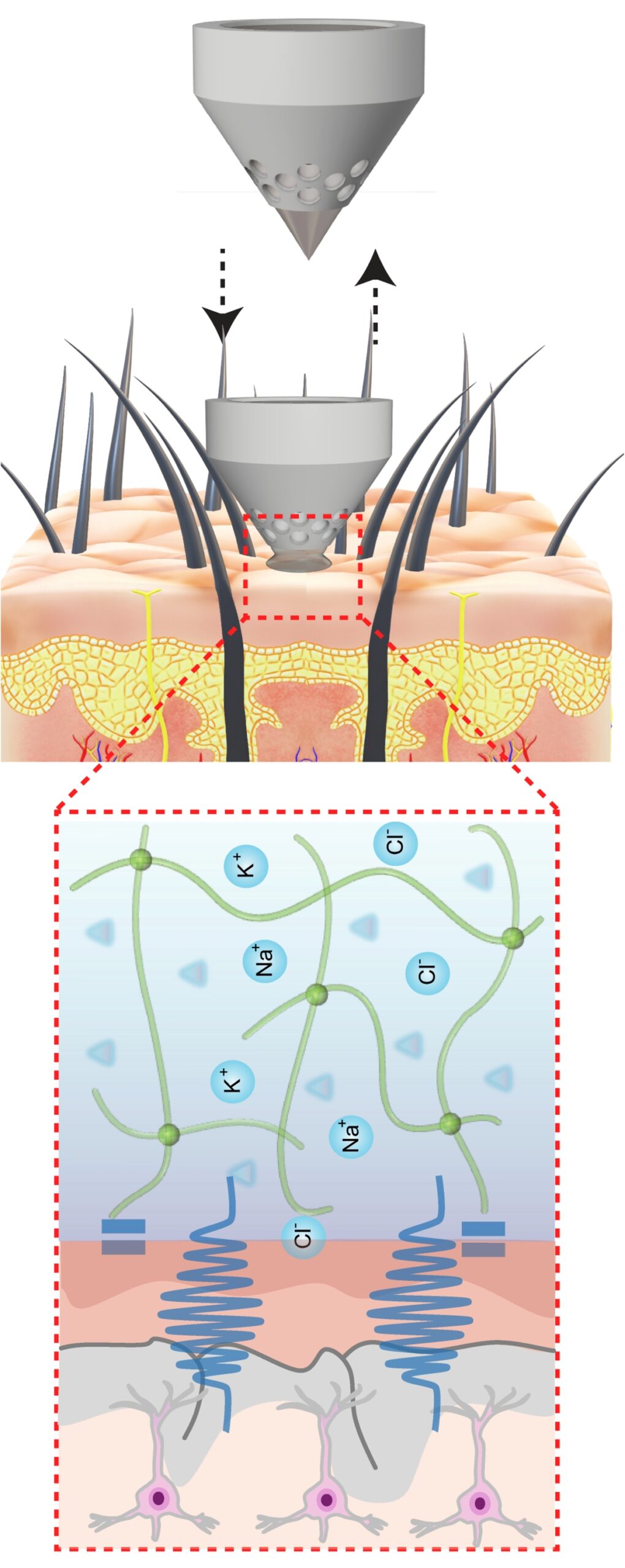
MindStretcH’s soft, cut-patterned mesh stretches around the head while helping sensors remain in place. Flexible liquid-metal wiring preserves the electrical connection as the headset bends and stretches.
Detachable cone-shaped sensors move between hair strands to reach the scalp. A soft, water-retaining gel helps maintain a steady connection while leaving minimal residue.
In month-long tests with six healthy participants, the reusable headset recorded brain activity associated with imagining hand movement. Recordings were comparable to a conventional wet-electrode EEG cap, and signal quality remained strong across repeated sessions.
“Reliable, long-term measurements are essential to move brain-computer interfaces and wearable EEG beyond short, controlled demonstrations,” said José del R. Millán, a professor in the Chandra Family Department of Electrical and Computer Engineering and one of the co-authors. “This work shows a path toward systems that people could use more comfortably in workplaces, clinics, and eventually at home.”
So far, the team has tested healthy subjects. They aim to continue testing during sweating and extended everyday activity and with patients.
Other researchers on the project include Ju-Chun Hsieh, Mengmeng Yao, Victoria Koptelova, Kai Wing Kevin Tang, Wenliang Wang, Jinmo Jeong, Hong Ding, Zoya Ahmad, Derek Wang, Tlali Engrav, Reyna Wang, Ashwin Gupta, Weilong He, William D. Moscoso-Barrera and Ayden Grimes of the Department of Biomedical Engineering and Hussein Alaweih and Satyam Kumar of the Chandra Family Department of Electrical and Computer Engineering.