
Concrete Canoe Floats On
With decades of history behind it, the civil engineering student organization is paddling toward a new era.
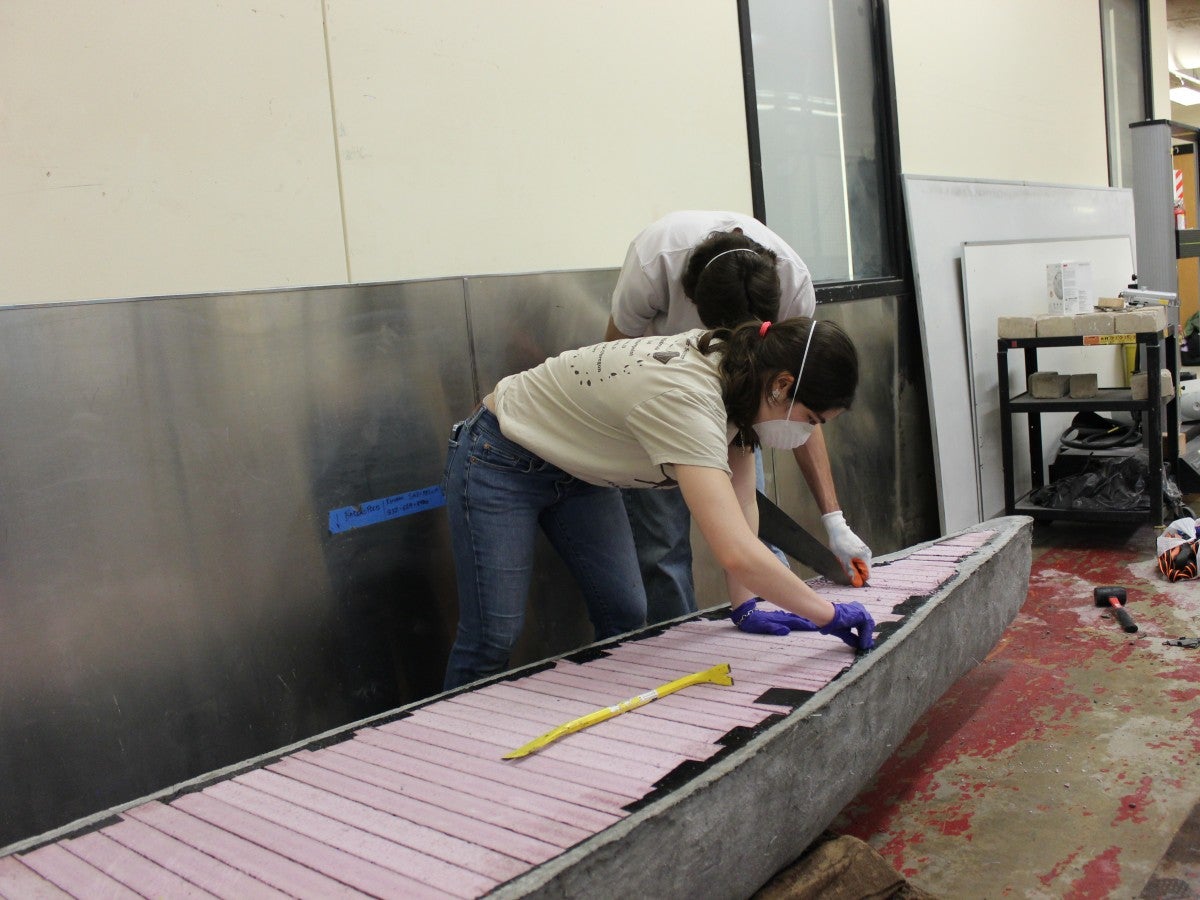
Canoes made of concrete? Is that a thing? How do they float?
Connor Baxter gets these questions all the time.
“Concrete floats the same way most boats float; they displace more area than there is in the canoe while the water is pushing up with more force than the weight of the it,” said Baxter, the student president of the American Society of Civil Engineers chapter at The University of Texas at Austin.
Concrete Canoe has more than 50 years of formal history UT. And it’s just what it sounds like.
Every year, this team of 20 active student members competes with other universities to build the fastest and most durable canoe made of concrete, while testing their fluid mechanics, project management and concrete mix design skills. The goal: make and eventually win nationals.
A rich history
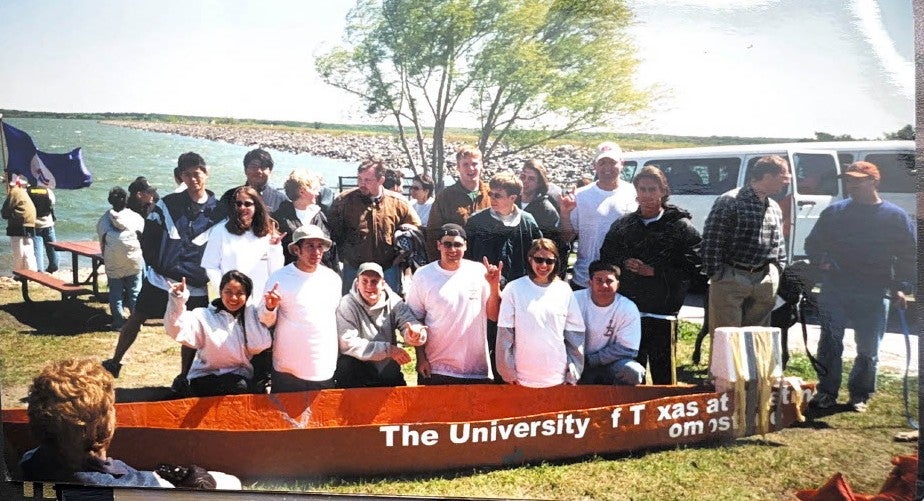
Concrete Canoe was officially established at UT Austin during the 1970’s under ASCE, the oldest engineering society in the U.S. Since then, the University has participated in the official competitions but was rowing even before then.
A glass case in Ernest Cockrell Jr. Hall commemorates the team, with more than a dozen plaques and trophies dating back to 1978. And there’s evidence of informal concrete canoe work dating back to the 1940s.
The organization has been an important opportunity for personal and professional development for thousands of Texas Engineers over the years, just like Hilda Lease, P.E.
The team helped Lease (B.S. civil engineering 2000) create new connections and lasting friendships. But most of all, it gave her taste of real civil engineering “Concrete canoe attracts students who want more than just a degree. Students who want hands-on experience, testing their own designs, future leaders and innovators,” Lease said. “And students who aren’t afraid of having to get a tetanus shot. I may have had a little trouble with the wire mesh stabbing me in the hand.”
Lease joined Concrete Canoe soon after arriving on the Forty Acres and remained an integral part of the team until graduation, eventually coming back to serve as a judge for the ASCE competition.
Today, Lease is the president and owner of RODS, Inc, a land surveying and subsurface utility engineering firm supporting public infrastructure projects across Texas.
Concrete Canoe helped Lease build her engineering foundation that eventually led to her forming her own company. It provided her hands-on engineering experience, leadership skills, networking opportunities, but most of all a community where she was pushed out of her comfort zone through growth and strong friendships to back her up.
Paddling forward
Today’s Concrete Canoers continue to rely on that decades-old community.
“Ever since I joined canoe, I’ve always found a strong community there and have made connections that will last me past my graduation,” said Marcela Vogel, a third-year civil engineering student and team captain. “And it is a good organization where students can explore different aspects of civil engineering.”
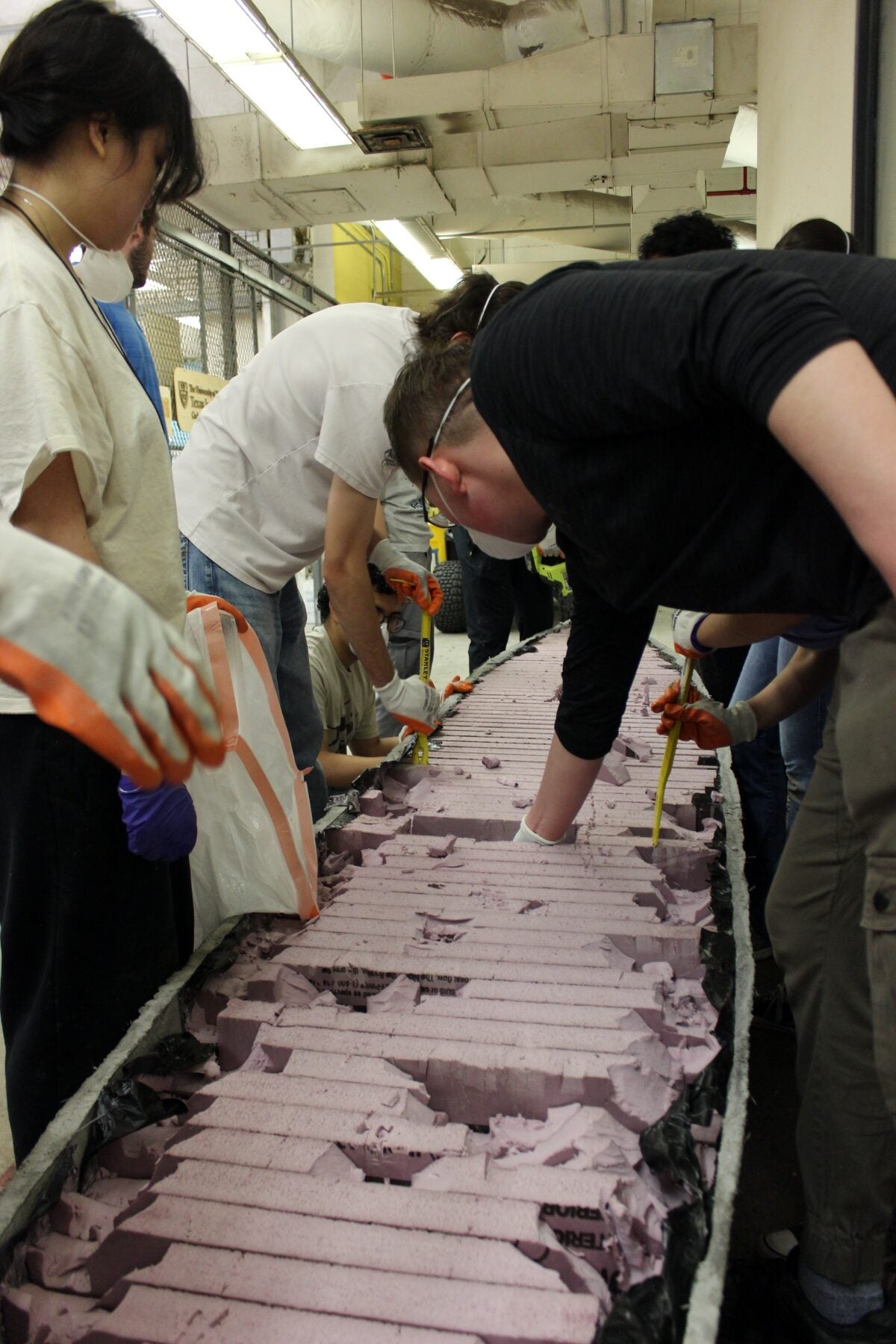
Like many communities, Concrete Canoe was disrupted by the COVID-19 pandemic. This disruption, combined with the regular churn of leaders graduating and new students coming in, caused the team to suffer a loss of critical knowledge that gets passed down year-to-year. They’ve been rebuilding that knowledge ever since.
“The way design competitions work is, every year a team makes a mistake, and then the next year the team knows not to make that mistake,” said Baxter, the ASCE student president. “It’s progressive knowledge that’s retained over time but a lot of that was lost when COVID hit, so we had to start from scratch.”
The team has since faced budgetary issues and space constraints. The leaders say their goal is to bring more first- and second-year students to competitions to get them excited about the team.
“I went to competition my first year and it’s the main reason why I wanted to continue in leadership, and I wish we could have more underclassmen experience the same thing I did then,” Vogel said.
In recent years, the team has built a foundation of knowledge, established relationships with donors and grown the organization. They aim to cement a permanent and dedicated presence on campus and win nationals one day.
Nationals or not, this unique organization has left a lasting impact on current and past members. It provides students with a community where they can grow in leadership and communication skills, but, most of all, learn and work with different aspects of civil engineering and build real-life skills.
“We are an organization that promotes learning and leadership for young civil engineers at UT Austin, and at the end of the day, we don’t just build canoes; we build confidence, technical experience and a strong foundation for the next generation engineers,” said Vogel.