
The Texas Engineer Building the Future of Nuclear in Wyoming
Chief engineer and Cockrell alumnus Jon McWhirter is working to show the science—and safety—behind next-generation nuclear power.
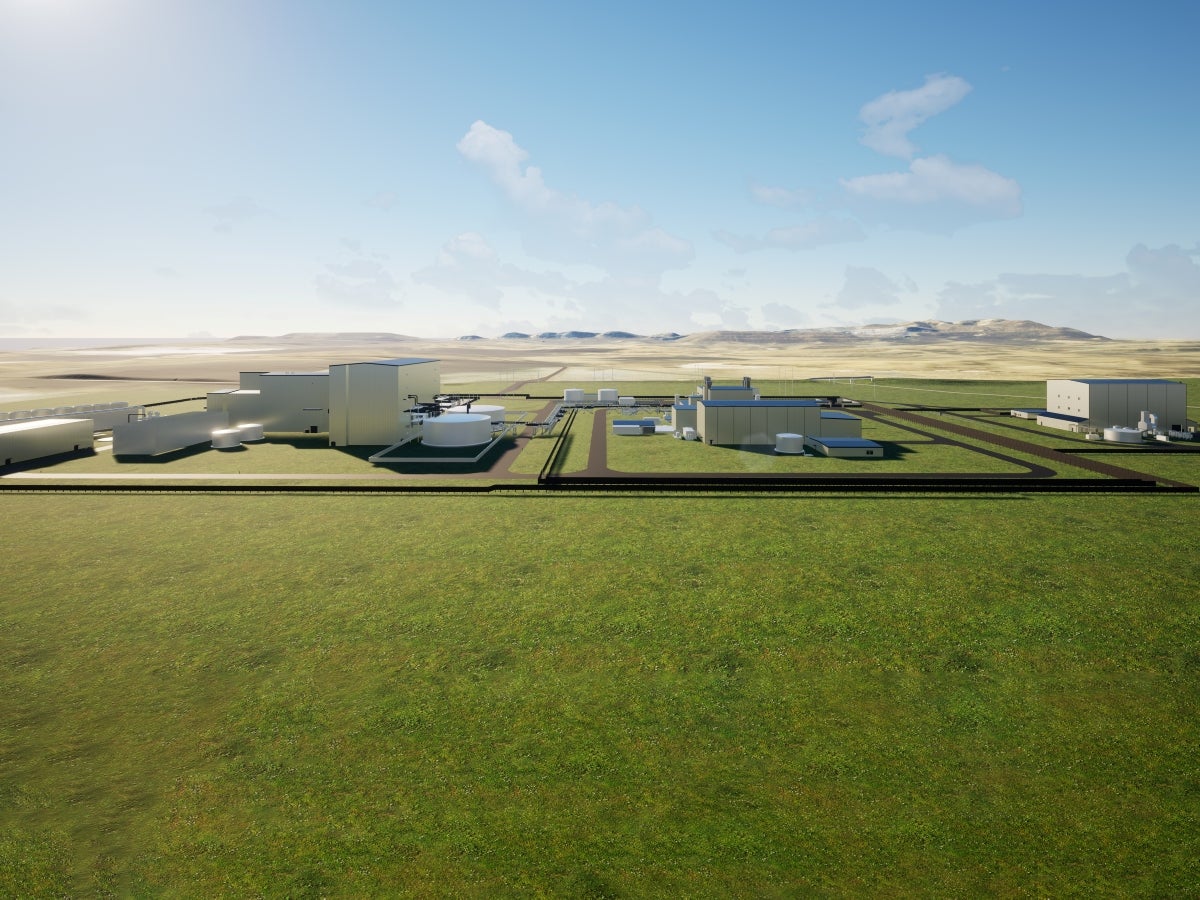
A rendering of the Natrium power plant that is set to open in Wyoming in 2031.
Safety has always been Jon McWhirter’s top priority. That’s true today, as he serves as a chief engineer in thermal hydraulics, one of seven chiefs TerraPower’s Natrium power plant, the first new plant approved by the Nuclear Regulatory Commission in nearly a decade.
And it was true in 1995, when, as a Ph.D. student at The University of Texas at Austin, McWhirter was involved in a minor lab accident. To be clear, McWhirter did everything right, including notifying all the necessary officials of the experiment.
But a single less than fully tight nut allowed a small amount of fluid to leak onto the floor, filling the room with smoke.
“It got written up in the school newspaper, with a headline of ‘nut causes leak.’ And my friends saw it and said ‘Jon, you’re the nut; you caused the leak.’”
Jon McWhirterTerraPower
But, ultimately, McWhirter’s quick thinking and safety-first approach resolved the situation without major incident.

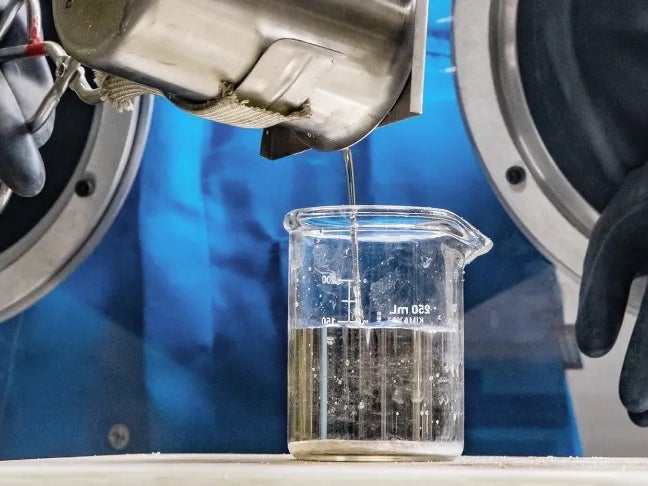
McWhirter remains steeped in experience with liquid metals, particularly alkali metals such as sodium and potassium. His Ph.D. research used an alloy of sodium (Na) and potassium (K) called NaK (‘nack’), which is a beautiful, silvery liquid at room temperature.
McWhirter became enamored with liquid metals as an undergraduate, due to a homework problem in his thermodynamics class, which showed how much higher a power plant efficiency could be if a liquid metal were used.
After getting his BSME from UT Austin in 1981, and serving as an officer on a nuclear submarine, McWhirter rejoined the mechanical engineering department as a graduate student working in the field of Magnetohydrodynamics under professors Dale Klein and Michael Crawford.
His deep experience with liquid metals—and his fascination with their potential—convinced him that nuclear plants using these materials as coolants can safely deliver far greater thermal efficiency.
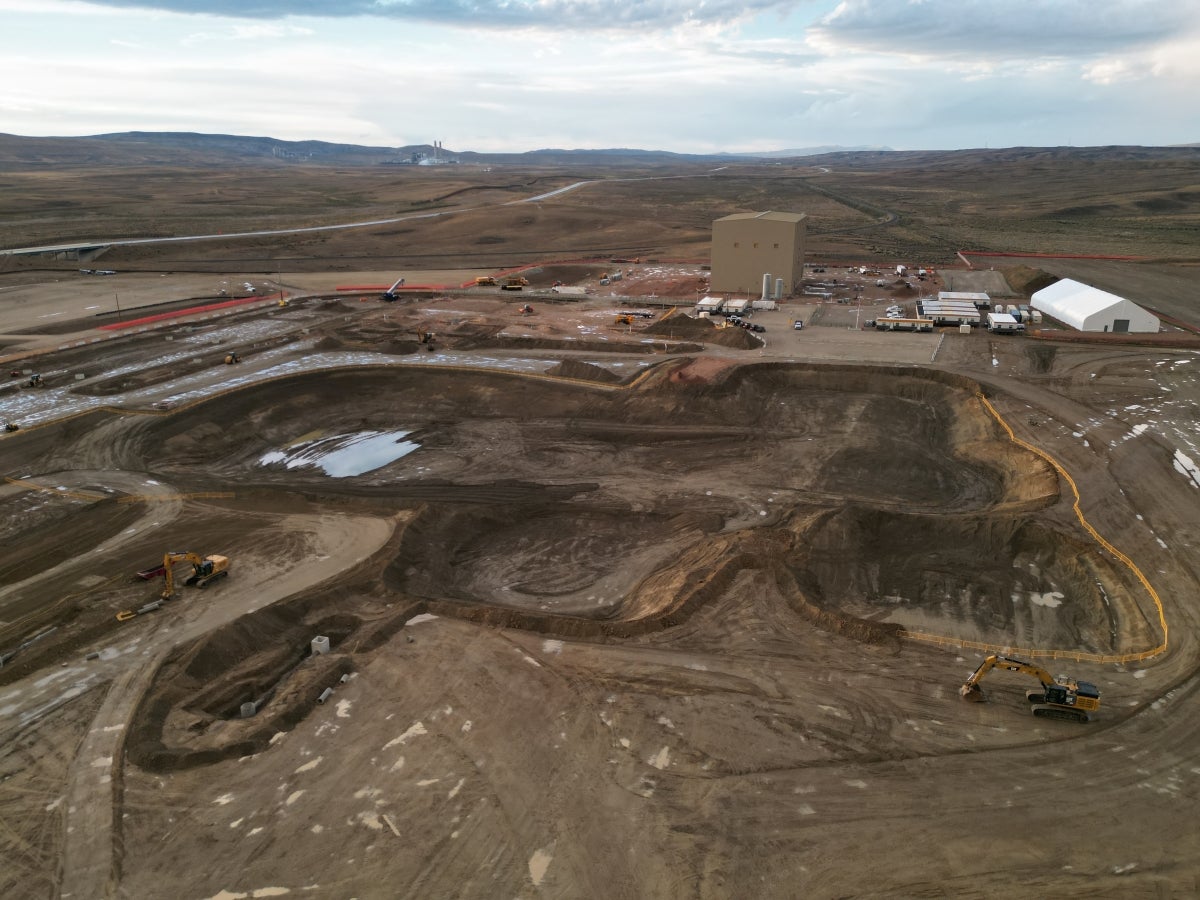
The Natrium power plant site in Wyoming under construction.
The Future of Nuclear Is in Wyoming
The Natrium (Latin for sodium) nuclear plant is planned to enter commercial operation in 2031, as part of a new wave of projects that seek to make nuclear power more accessible. To do this, advanced nuclear reactors (or Generation IV reactors) aim to be safer, more fuel-efficient and less expensive than conventional light water reactors.
For example, most nuclear reactors produce the same constant level of energy 24/7, regardless of whether it’s needed in the moment. This means that a plant can sometimes produce more power than needed, and in some cases even pay consumers to take electricity off its hands, as in the middle of the day with sunshine when solar energy is pumping power to the grid.
However, the multi-stage heat exchange of the Natrium plant (which uses liquid sodium and molten salt to move energy from the core of the reactor to steam generators) solves this problem. By segregating the cold and hot salt tanks, engineers can control how much steam gets made. This in turn controls how much energy gets produced.
“Right now, most nuclear plants only convert about 33% of total heat production into electricity,” McWhirter explained. “You see the big cooling towers? Those are putting off about 67% of the heat generated by the plant as ‘waste heat’—literally. It’s hardly useful for anything. And I’ve always thought… gosh, we’ve got to do better, it’s such a waste.”
That’s the big draw of investing in advanced nuclear reactors like the Natrium technology, and why McWhirter was working with something like NaK thirty years ago: He wanted to know just how efficient nuclear could get.
The question of efficiency started when he was young. McWhirter grew up in Austin as an avid train enthusiast, so the question was a driving force for his curiosity. His high school physics teacher at Pflugerville High School, Ms. Vernagene Mott, inspired him to pursue science and engineering.
Growing Demand and a Change in Perception
McWhirter was the third employee hired by TerraPower for the Natrium project, which had split off from another project in 2008. It then went through many iterations and international partnerships as public interest for nuclear remained lukewarm at best.
However, with the advent of artificial intelligence and the growing demand for carbon-free power, especially in Texas, interest in the technology and plant in Wyoming has only increased. McWhirter says it’s important to work to reduce greenhouse gas emissions. It’s this work that contributes to a concrete societal good: reliable, renewable energy, which has inspired his work for decades.
And while acceptance of nuclear power is turning in a positive direction, there’s still work to be done. That’s where McWhirter finds himself now.
“A lot of people are still unfamiliar with the promise of nuclear power, and we’re here to change that,” says McWhirter.
A recent Gallup poll showed that about six-in-ten American adults are in favor of nuclear power playing a role in our energy mix. This is up 16 percentage points since 2016. While McWhirter characterized change in the nuclear industry as “glacial,” he said, “It’s that way for a reason.” There is no room for mistakes.
With everything he has seen and learned about nuclear power, McWhirter is completely comfortable with the safety of these plants. After working in this industry for so long, McWhirter says he’d be happy to have a nuclear plant as a neighbor.
“I would not hesitate.”